Brand book vs brand guidelines vs style guide: what’s the difference?
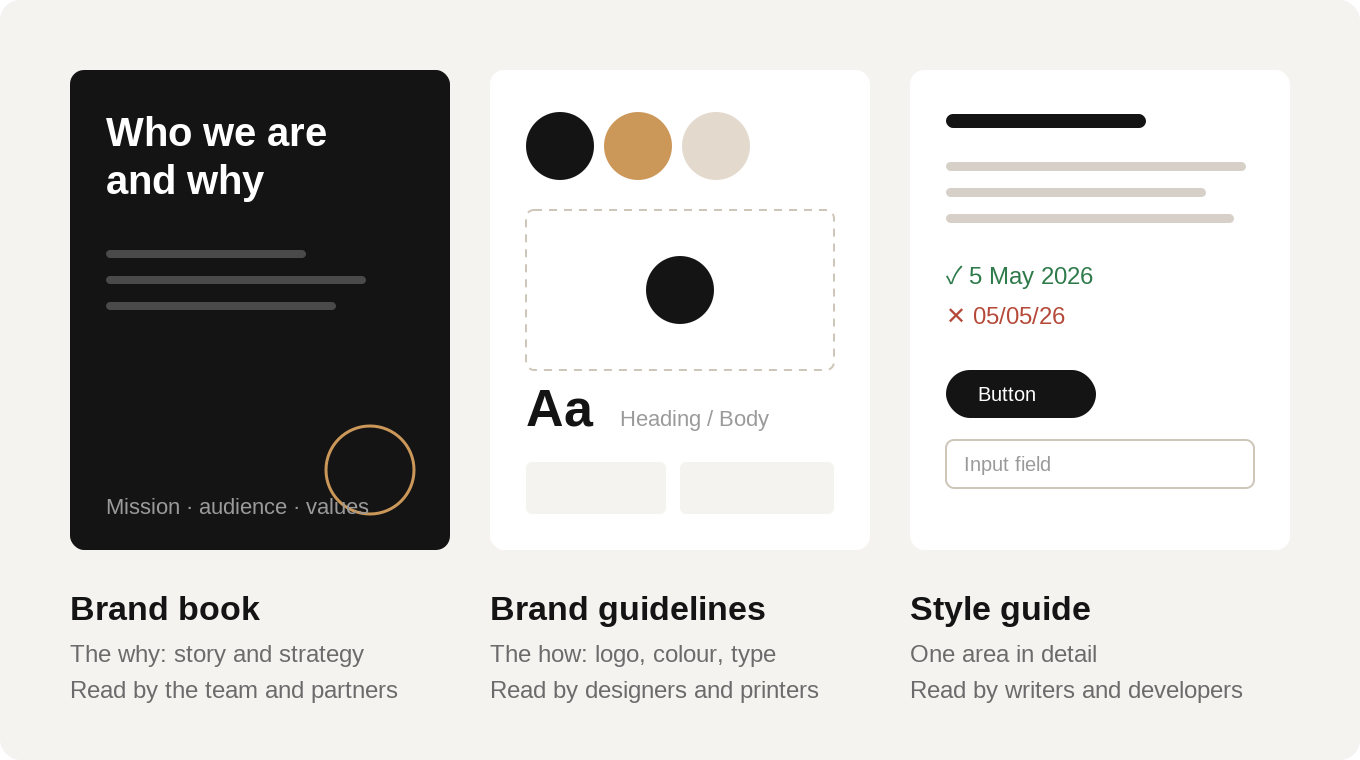
A brand book explains who the brand is and why it exists. Brand guidelines set the rules for using the identity: logo, colour, typography, graphics. A style guide goes deep into one area, usually writing or a website. Many studios, mine included, put the first two into one document and call it whatever the client calls it. What matters is what’s inside.
Why the names get mixed up
There’s no standard. Agencies, in-house teams and software companies use these words in their own way, and clients repeat whichever term they heard first. Markets differ too: in Eastern Europe and Central Asia a “brand book” usually means the full rulebook with strategy and identity, while in English it more often means the story part, and “guidelines” means the rules. So when a client asks me for a brand book, my first question is what they plan to do with it.
Before you pay for a “brand book”, ask for the list of contents.
Brand book: who the brand is
A brand book is for people who need to understand the brand before they make anything for it: a new marketing manager, an agency, a partner. It usually covers:
- what the business does and what it promises its customers
- audience and positioning
- personality and values
- tone of voice, at least in outline
- the idea behind the name and the logo
It’s short on rules and long on reasons. A good one can be read in one sitting.
Brand guidelines: how to use the identity
Brand guidelines are the working document. Designers, printers, sign makers and whoever runs your Instagram open them when they need to get something right. They cover:
- logo versions, clear space, minimum size, and what not to do with the logo
- colour palette with codes for print and screen
- typefaces and how to set headings and body text
- graphic elements, patterns and icons
- photo style
- examples on real items: business cards, signage, social posts, packaging
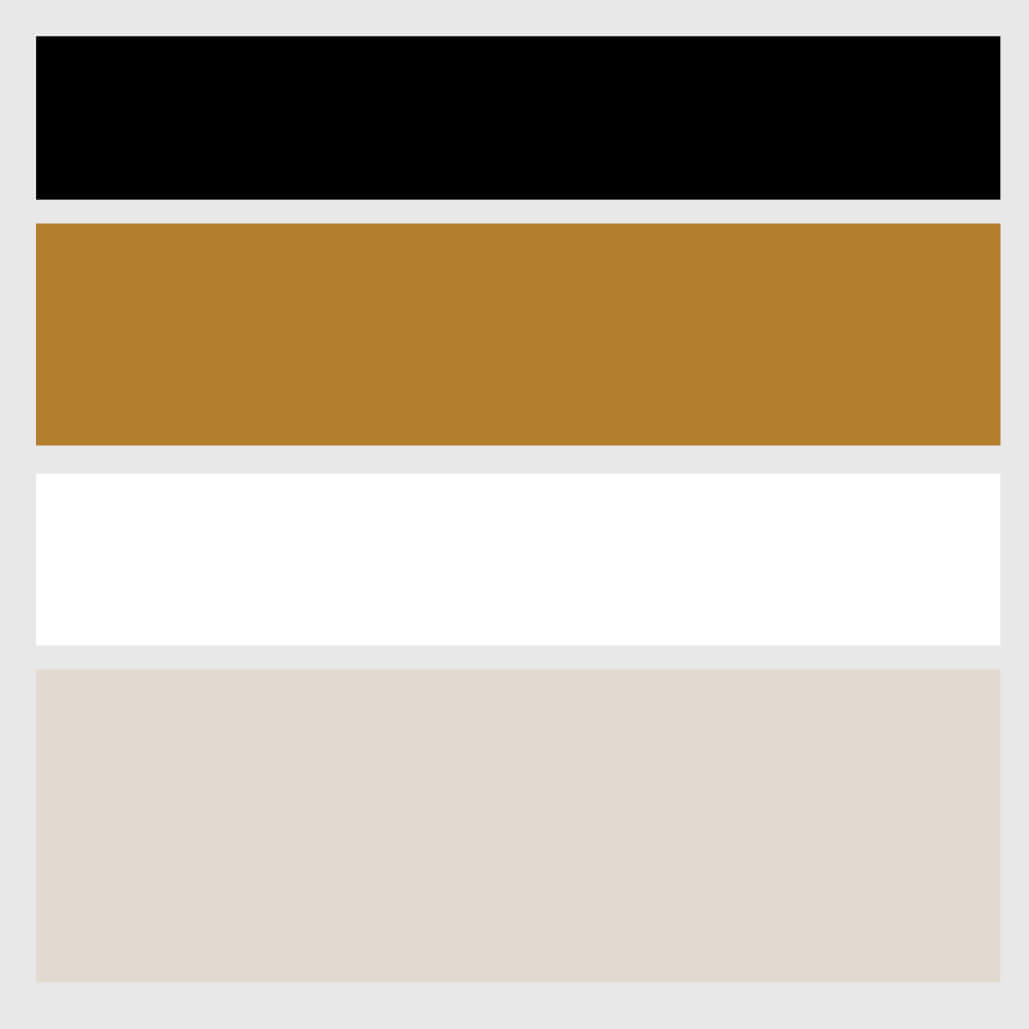
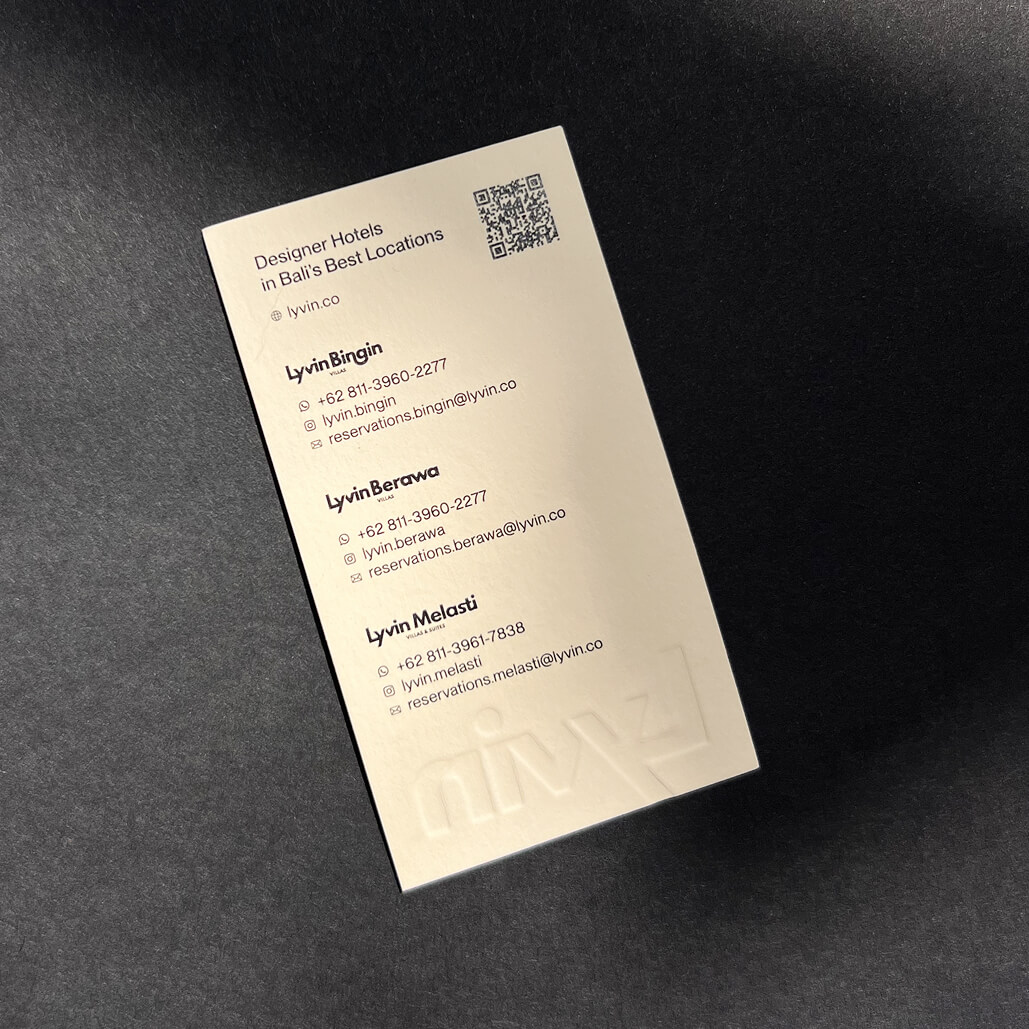
In my packages this is the core deliverable. The basic package covers the logo, colour and typography. The larger ones add graphics, applications and photo style.
Style guide: one area in detail
A style guide narrows to one area. An editorial style guide covers how the brand writes: spelling, numbers and dates, words to use and words to avoid. A web or UI style guide covers buttons, forms and spacing on a website or in an app. At product companies it grows into a design system with ready-made code components.
If your business publishes a lot of text or runs a product with many screens, you’ll need one. Most small businesses don’t, at least at the start.
Side by side
| Brand book | Brand guidelines | Style guide | |
|---|---|---|---|
| Answers | Who are we, and why? | How do we use the logo, colour and type? | How exactly do we write, or build screens? |
| Read by | Team, partners, agencies | Designers, printers, contractors | Writers, editors, developers |
| Format | Short, reads like a story | Long, used as a reference | Often a living web page |
| You need it when | The team grows past the founders | Anyone besides you makes things for the brand | You publish a lot or run a digital product |
Which one do you need?
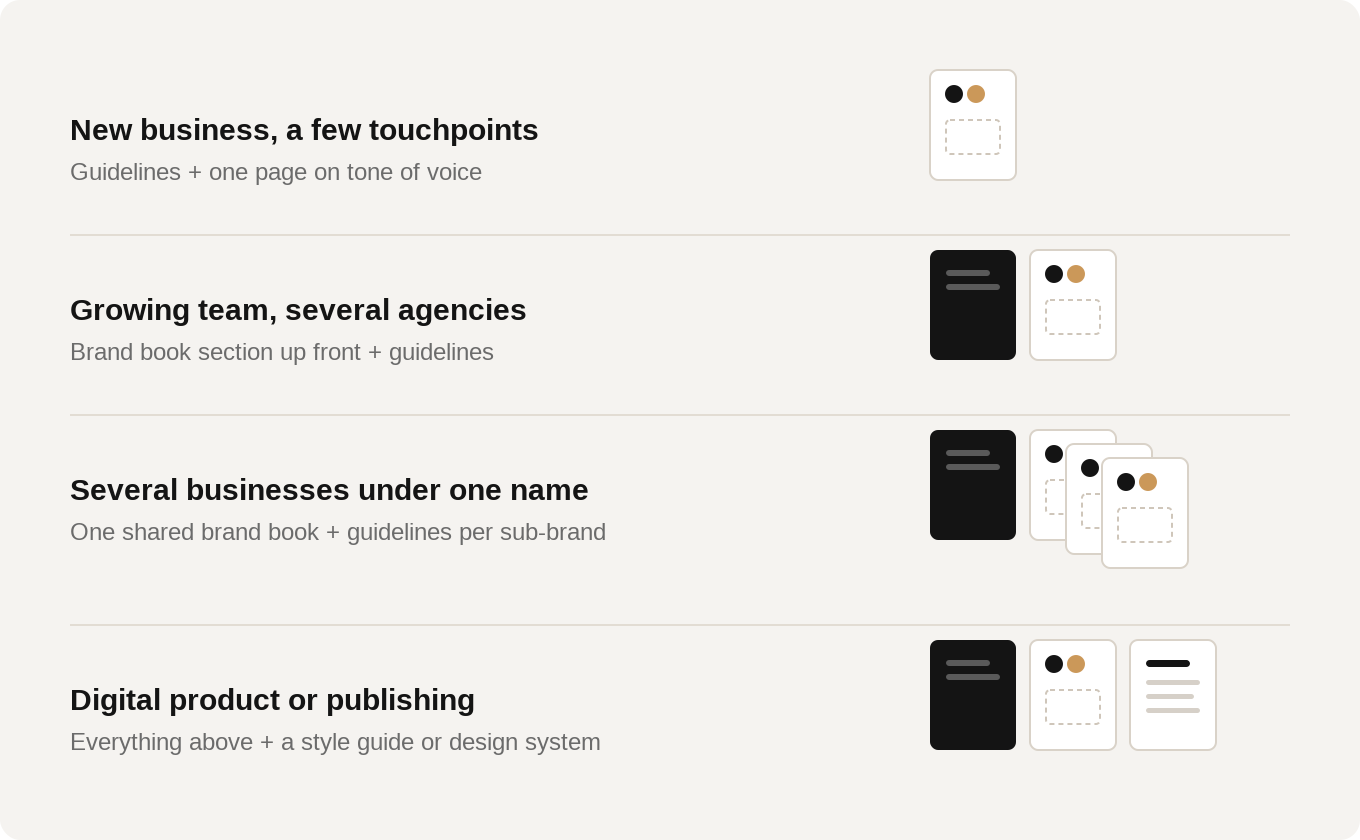
A new business with a logo and a few touchpoints needs brand guidelines. One document with rules for the logo, colour and type saves money every time someone prints a menu or makes a post. Add a page on tone of voice and it covers most of what a brand book would.
A growing team, or several agencies working for you, needs the guidelines plus a brand book section at the front, so newcomers learn the reasons before the rules.
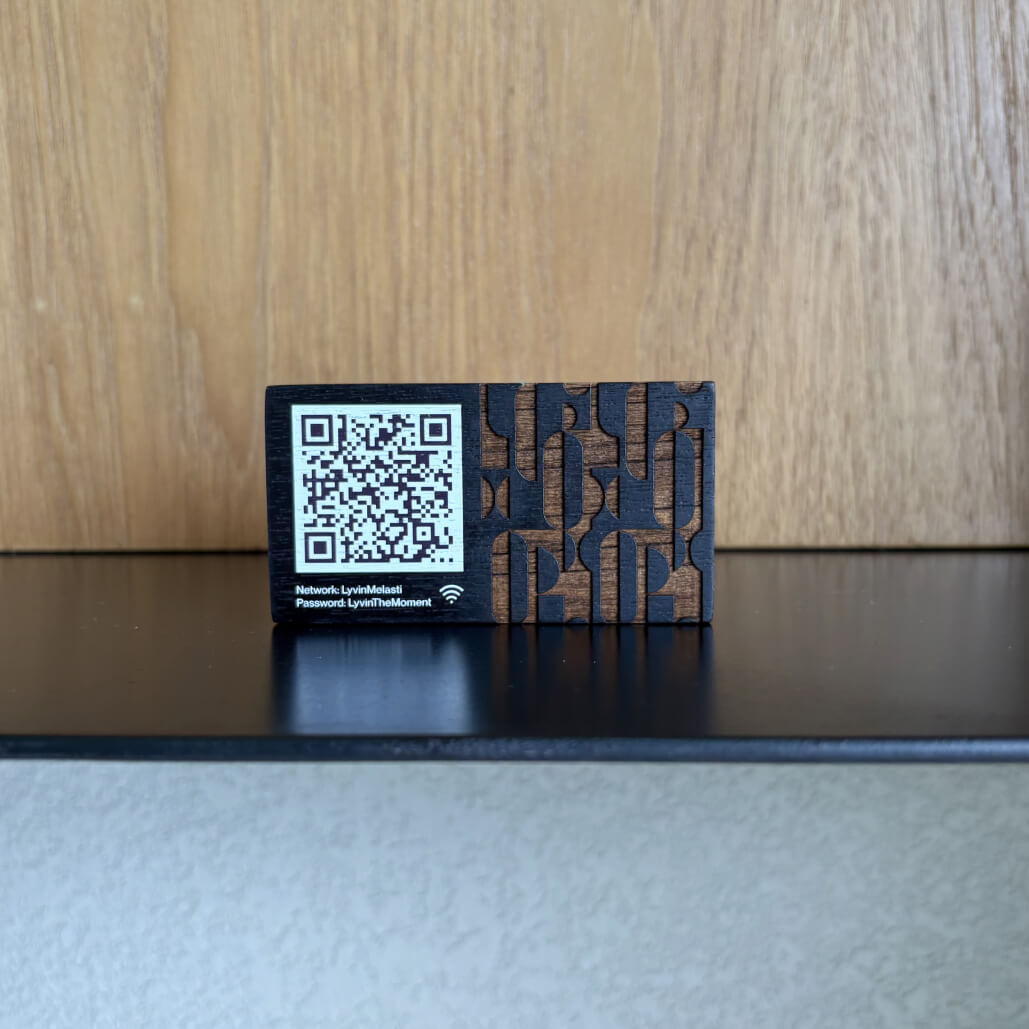
Several businesses under one name, like a hotel with a spa and a café, or a developer with several properties, needs one shared brand book and separate guidelines for each sub-brand. That’s the logic behind the ASAI family (Village, Spa, Cafe, Gym) and behind Lyvin Properties, where each property gets its own identity inside one system.

A digital product or a publishing business adds a style guide or a design system on top.
Good examples to study
These three projects show the difference between the documents better than any definition.
- Kurppa Hosk · Crosskey A brand book in action: one idea, “Banking Power!”, came first, then a graphic toolbox around the logo. The rollout started inside the company, with staff presentations and internal materials, before anything went public.
- Kurppa Hosk · Alleima A global brand built from scratch over three years after a split from Sandvik. Look at how the system holds across a large company with many teams making things.
- AKQA and Koto · Discord Brand guidelines that border on a design system: shapes taken from the product, motion rules around one dot, and a “community pattern” with its own usage rules.
FAQ
Is a brand book the same as brand guidelines?
People often use the two as synonyms. Strictly speaking, a brand book explains the strategy and the story, and brand guidelines set the rules for the visual identity. Before you pay for either, ask for the list of contents.
What’s the difference between a style guide and brand guidelines?
Brand guidelines cover the whole identity. A style guide goes into detail on one area, usually writing or a website.
Brand guidelines vs design system: which do I need?
A design system is a library of components for a digital product, often with code. Brand guidelines cover the identity everywhere, including print, signage and packaging. Product companies usually need both; a café or a villa needs only the guidelines.
What should brand guidelines include at a minimum?
Logo versions and rules, colours with codes for print and screen, typefaces, and a few examples on real items.
How long should brand guidelines be?
Long enough to answer the questions your contractors actually ask. If nobody opens the file, it’s usually too long or has no examples.
